Chiswick High Road bulky rubbish collection options
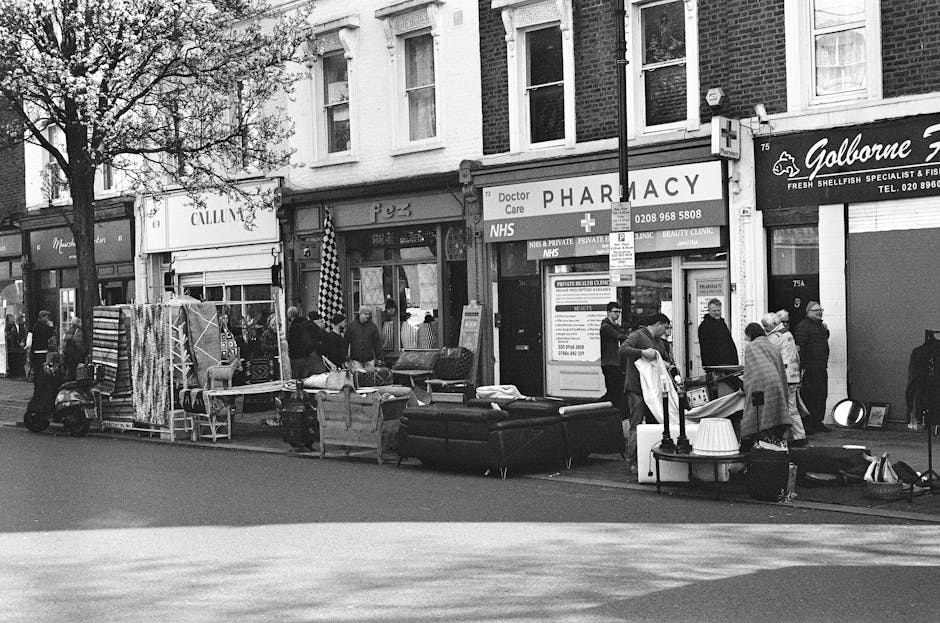
If you are staring at an old sofa, a broken wardrobe, a pile of flat-pack offcuts, or a mattress that has somehow become part of the room decor, you are probably not looking for theory. You want the practical answer: what are the best Chiswick High Road bulky rubbish collection options, how do they work, and which one makes the least fuss for your day? Fair enough. In a busy stretch like Chiswick High Road, access, timing, and space matter just as much as price.
This guide breaks down the main bulky waste collection methods, where each one fits best, and what to watch out for before you book. You will also find a simple checklist, a comparison table, and a real-world example so you can make a sensible choice without the usual headache.
Why Chiswick High Road bulky rubbish collection options Matters
Chiswick High Road is the sort of place where logistics can be deceptively tricky. There are homes, flats, shops, cafes, offices, and a fair amount of foot and vehicle traffic. That means bulky waste collection is not just about getting rid of stuff. It is about choosing a method that fits the street, the timing, the access, and the type of waste.
Let's face it: a large item left in the wrong place becomes a nuisance quickly. It can block hallways, reduce parking space, and create a safety issue if it sits around too long. For businesses, it can affect customer access and the overall impression of the premises. For households, it can turn one clear-out into a week of clutter. Nobody wants that.
Choosing the right option also helps you avoid common delays. Some bulky items need careful handling, some require special disposal, and some simply are not suitable for standard kerbside collection. If you are trying to clear a loft, empty a garage, remove furniture after a move, or shift renovation debris, the best solution is usually the one that matches the waste type rather than the one that looks cheapest at first glance.
That is where a broader rubbish removal service can help, especially when you need flexibility rather than a one-size-fits-all approach. In many cases, it is worth looking at professional rubbish removal services alongside more fixed collection methods. If you are dealing with a mix of furniture, broken household items, and general junk, that mix-and-match flexibility can save a lot of time.
How Chiswick High Road bulky rubbish collection options Works
In simple terms, bulky rubbish collection works by matching your waste to the right removal method. The main questions are usually: how much waste do you have, how quickly do you need it gone, is there easy access, and can the waste sit on-site for a short time?
On Chiswick High Road, access can be the deciding factor. A skip might be perfect if you have space outside a property or on private ground. A grab lorry may be better if the waste is loose, heavy, or piled awkwardly. A man and van team may suit smaller clear-outs where you want items lifted from inside the property. And a wait-and-load approach works well when there is no permission or space for a skip to stay put.
For domestic jobs, you may also want to compare specialist household services such as domestic skip hire and house clearance. The right choice often depends on whether you want to load the waste yourself, or whether you would rather have the lifting handled for you. Truth be told, people often only realise that distinction once they are halfway through carrying a sofa down the stairs. Not ideal.
If you are planning a larger project, such as a strip-out, office refresh, or building works, the decision becomes more specific. A builder's job may fit builders skip hire, while a commercial premises might need commercial skip hire. For construction-related waste, you may also need a more specialised route like construction waste disposal or construction waste clearance.
One important point: bulky rubbish is not the same as hazardous waste. If an item contains oils, chemicals, asbestos, refrigerants, or other restricted materials, it needs the correct handling route. When in doubt, check against the provider's guidance and use the relevant specialist service such as hazardous waste disposal.
Key Benefits and Practical Advantages
The biggest benefit of getting the right collection option is simple: it reduces friction. Fewer delays, fewer unexpected extra steps, less lifting, and less time wondering whether the waste will actually disappear on schedule. That matters more than people admit.
- Saves time: The right method gets bulky items removed in one go, instead of dragging the job out over several trips.
- Reduces physical strain: If you are moving awkward furniture or heavy household junk, professional lifting is a blessing.
- Improves access management: On a busy road, a good plan keeps pavements, entrances, and parking bays clearer.
- Supports better sorting: A suitable waste route makes it easier to separate reusable, recyclable, and restricted items.
- Helps avoid waste mistakes: The wrong container or collection type can lead to refusals, delays, or extra charges.
Another practical advantage is predictability. If you know the collection is booked for a set window, you can arrange your day around it. That is useful whether you are a homeowner trying to finish a clear-out before the weekend or a manager dealing with an office or shop refit.
For many readers, there is also a less visible benefit: peace of mind. A sensible bulky waste plan means you are not leaving items in the hallway "just for now", which, as everyone knows, can easily become "for two weeks".
Who This Is For and When It Makes Sense
These options suit a wide range of people, but the best fit depends on what you are clearing and how much control you want over the process.
Homeowners and tenants
If you are replacing furniture, clearing a spare room, or finally sorting the garage, bulky rubbish collection gives you a quicker exit than trying to break everything down and make repeated trips yourself. It is especially useful if you are clearing out after a move or before decorating.
Landlords and managing agents
End-of-tenancy clearances often include mattresses, wardrobes, chairs, and general mixed rubbish. In these cases, a service with flexible lifting and loading can be more practical than asking tenants or staff to manage waste themselves.
Tradespeople and contractors
For builders, decorators, and refurbishment teams, speed and site control matter. Some jobs suit grab hire services, while others are better served by builders waste removal or even site clearance for more substantial clean-up work.
Small businesses
Shops, salons, cafes, and offices on or near Chiswick High Road often need discreet, efficient removal. If you are clearing desks, shelving, archive boxes, or broken fixtures, a service built around commercial needs can keep disruption low. A good example is office clearance, especially when the job has to happen outside normal trading hours.
When it makes sense
- When you have items too large for normal bins
- When loading everything yourself would take too long
- When space on the street or driveway is limited
- When you need the work done on a tight schedule
- When the waste includes a mix of furniture, appliances, and general junk
Step-by-Step Guidance
Here is a straightforward way to decide, without overthinking it. You do not need a spreadsheet. Just a clear process.
- List what needs removing. Write down each item or group of items. Furniture, appliances, garden waste, refurbishment waste, paper archives, and so on.
- Separate normal bulky waste from restricted waste. Anything hazardous or specialist should be flagged early.
- Check access. Ask yourself whether a skip can safely fit, whether a vehicle can park nearby, and whether there are stairs, narrow halls, or awkward turns.
- Decide whether you want to load the waste yourself. If not, look at removal-led options rather than skip-only solutions.
- Choose the most practical collection type. For example, a quick flat clearance may suit man and van, while a larger quantity of mixed waste may point toward skip hire.
- Check whether a permit is needed. If a skip must go on a public road, you may need a permit. It is better to confirm this early via skip permits or skip hire permits.
- Get a quote with enough detail. Mention access, floor level, item type, and whether loading help is needed. Surprises are cheaper to prevent than to fix.
- Prepare the waste before collection. Keep items together, remove loose valuables, and make sure nothing dangerous is mixed in.
A small but useful tip: if you are dealing with a short-notice clear-out, ask whether same day skip hire or a fast collection slot is available. It is not always necessary, but when the calendar is tight, it can rescue the whole plan.
Expert Tips for Better Results
These are the little things that often make the difference between a smooth collection and a slightly chaotic one. Nothing dramatic. Just the stuff that saves time and irritation.
- Measure awkward items before booking. A sofa that "probably fits" is not the same as a sofa that actually fits through the hallway.
- Think about weight, not just volume. Bricks, tiles, soil, and dense rubble can be far heavier than they look.
- Keep the collection point clear. A tidy access route helps crews work faster and more safely.
- Group similar waste together. It makes the loading process more efficient and helps with sorting.
- Use enclosed storage where security matters. If the waste needs to stay on-site for a while, an enclosed and lockable skip hire option can be useful.
- Choose the right service for the item type. A large fridge, for instance, is often better handled through a specific route such as fridge and appliance removal.
One more thing: if you are clearing a property in stages, don't try to force everything into one plan. Sometimes the smartest approach is a mix of services. A little bit of this, a little bit of that. It sounds messy, but it often works better in real life than the perfect plan on paper.
Common Mistakes to Avoid
A lot of bulky waste problems come from simple assumptions. Usually harmless ones, until they are not.
- Assuming all bulky items can go in the same load. Some waste streams need special handling.
- Forgetting about street access. Chiswick High Road can be busy, and parking is not always generous.
- Booking a skip without checking space. If there is nowhere safe to place it, the plan falls apart fast.
- Not checking what can go where. A small mistake with prohibited items can create a bigger delay later.
- Underestimating how much waste there is. Everyone does this at least once. The pile always seems smaller before you start sorting.
- Leaving items until the last minute. That is how one clear-out becomes three stressful days and a strong cup of tea.
If the job involves confidential papers, shredding may be better handled separately through confidential shredding rather than tipped into general bulky rubbish. That is one of those details people often forget until the very end.
Tools, Resources and Recommendations
You do not need fancy tools to organise a bulky waste collection, but a few practical resources make the process easier.
- A tape measure: Essential for sofas, wardrobes, appliance doors, and awkward stair turns.
- Basic room photos: Helpful when asking for a quote, especially if the access is tight.
- Item list: A simple note on your phone is fine.
- Access check: Look at gate widths, parking options, and whether waste needs to be carried from upstairs.
- Service comparison: Compare skip-based and uplift-based options before you commit.
For detailed preparation, the page on what can go in a skip is a helpful starting point if you are considering a skip route. It can save you from mixing in something unsuitable by accident.
If you are still unsure about price structure, it is sensible to review skip sizes and prices and then compare that with a more hands-off collection option. The best value is not always the cheapest headline number; it is the option that fits your actual job.
For readers who want to understand how waste is handled after collection, recycling and sustainability is worth reading too. It helps explain why sorting and responsible disposal matter beyond the simple act of getting rid of clutter.
Law, Compliance, Standards, or Best Practice
When bulky waste is being removed in London, the main thing is to use a lawful, traceable disposal route and to avoid putting waste out in a way that causes obstruction or fly-tipping risk. You do not need to memorise the legal framework, but you should expect a reputable provider to handle waste responsibly and keep things above board.
For householders and businesses alike, best practice is pretty consistent:
- Use a provider that handles waste through proper channels
- Keep hazardous items separate unless the service explicitly accepts them
- Do not place waste on pavements, verges, or road space without checking local rules
- Ask whether a permit is needed when placing a skip on public land
- Make sure any service you choose is clear about how waste will be transported and processed
There is also a safety angle. Heavy lifting, sharp edges, broken glass, and unstable stacks all create avoidable risks. If a load includes difficult items, a more professional solution is usually the smarter one. That is why services such as insurance and safety and health and safety policy can be useful reference points when choosing a provider.
If you are organising work for a business or building project, you may also want to look at terms and conditions and payment and security so you know exactly how the booking is handled. That is just good housekeeping, really.
Options, Methods, or Comparison Table
The table below gives a plain-English view of the main bulky rubbish collection options. There is no perfect one-size-fits-all answer, and that is the point. Different jobs need different tools.
| Option | Best for | Strengths | Things to consider |
|---|---|---|---|
| Skip hire | Mixed bulky waste, DIY, clear-outs, refurb jobs | You can load at your own pace; good for larger volumes | Needs space; may need a permit; you load it yourself |
| Wait-and-load | Quick collections where space is tight | No long on-street placement; useful where permits are awkward | You need to be ready to load quickly |
| Grab hire | Heavy, loose, or awkward waste piles | Fast loading for dense or bulky material; less manual handling | Needs suitable access for the vehicle |
| Man and van | Smaller clearances, furniture, light mixed waste | Flexible, inside loading, good for flats and houses | May be less suitable for very heavy or very large volumes |
| Specialist item removal | Appliances, mattresses, sofas, confidential waste | Correct handling for specific items | May need separate booking for different item types |
If you are trying to decide between methods, start with the access problem first, not the price. The "cheapest" option that cannot physically get to your waste is not really cheap at all.
Case Study or Real-World Example
Imagine a small flat above a shop just off Chiswick High Road. The occupants have two wardrobes, a mattress, a broken desk, some boxed household junk, and a fridge that no longer works. There is limited parking outside, narrow access through the building, and nobody wants waste hanging around for days.
In that kind of situation, a single skip may not be the neatest answer. A skip would need space, and if it had to sit on the road, a permit would need sorting. A better plan might be a quick uplift with a man and van team for the furniture and general rubbish, plus separate appliance removal for the fridge. If there were additional renovation offcuts, a small skip or same-day collection could be added for the heavier waste.
What tends to work well in real life is keeping the load simple. One team, one access route, one collection window. People often feel relieved once the heavy items start moving, because the room suddenly looks manageable again. You can almost hear the place exhale. Slightly dramatic, maybe, but true.
For a larger commercial scenario, say an office on or near the High Road replacing desks and shelving, a different mix might be better. A planned office clearance with a clear time slot, good loading access, and an agreed sorting plan can cut disruption and keep the business moving. In that setting, the right choice is the one that gets the job done cleanly, not necessarily the one with the most impressive-sounding label.
Practical Checklist
Use this before booking any bulky rubbish collection. It keeps the process tidy and stops small issues becoming expensive ones.
- Have you listed every item that needs removing?
- Have you separated hazardous, electrical, or specialist waste?
- Do you know whether you want loading help or not?
- Is there enough access for a skip, grab lorry, or collection team?
- Would a permit be needed if a skip goes on the road?
- Have you checked whether the items fit through doors, stairways, and hallways?
- Have you asked how the waste will be recycled or disposed of?
- Have you compared a few relevant options rather than settling on the first one?
- Have you confirmed the collection time and any site preparation required?
- Have you removed anything personal, valuable, or confidential from the waste?
That is enough to get most jobs moving smoothly. Not glamorous, but effective.
Get a free quote today and see how much you can save.
Conclusion
The best Chiswick High Road bulky rubbish collection options are the ones that fit your access, your timetable, and the kind of waste you actually have. Skip hire works well for self-loaded clear-outs, wait-and-load suits tight spaces, grab hire is strong on heavy material, and man and van collection is ideal when you want a more hands-on removal team to do the lifting. Sometimes the right answer is even a combination of methods.
If you take one thing from this guide, let it be this: start with the waste type and the access conditions, then choose the method. That order saves a lot of hassle. And a lot of second-guessing, which nobody needs on a busy street.
With a clear plan, bulky rubbish collection becomes one less thing hanging over you. A bit of space returns, the job feels lighter, and you can get back to the rest of your day with less clutter and less stress. A small win, but a very real one.
Frequently Asked Questions
What is the best bulky rubbish collection option on Chiswick High Road?
The best option depends on what you are removing and how much space you have. For larger mixed loads, skip hire is often practical. For tight access, wait-and-load or man and van can be easier.
Do I need a skip permit on Chiswick High Road?
If the skip is placed on a public road or other public land, a permit may be needed. If it is going on private property with enough space, you may not need one. It is always worth checking before booking.
Can bulky furniture go in a skip?
Often, yes, as long as the skip provider accepts the item and it does not contain restricted materials. Sofas, chairs, and wardrobes are common examples, but oversized items should be checked first.
Is wait-and-load better than skip hire?
It can be, if you have limited space or cannot keep a skip outside for long. The trade-off is that you need to be ready to load the waste quickly during the collection window.
What bulky items need special handling?
Fridges, some appliances, confidential paperwork, and any waste that may be hazardous should be handled separately. Specialist collection is safer and helps prevent compliance issues.
How do I choose between grab hire and man and van?
Grab hire is usually stronger for heavy, loose, or larger piles of material. Man and van is often better for smaller clearances, inside lifting, and mixed household items.
Can I book same-day bulky rubbish collection?
Sometimes, yes. Availability depends on the day, the type of waste, and access conditions. If the job is urgent, ask early about same-day or fast-turnaround options.
What should I do before the collection team arrives?
Move the waste to a clear, accessible point if you can, remove personal items, and separate anything restricted. A quick tidy-up of the route really helps.
Is bulky waste collection suitable for offices and shops?
Yes. Offices, shops, and other commercial premises often use clearance services for furniture, fixtures, and general waste. Timing and discretion matter more in these settings, so booking around business hours is often sensible.
How can I avoid extra charges?
Give an accurate description of the waste, mention access issues, and do not mix in prohibited items. Clear information at the start is the easiest way to keep costs under control.
What happens to bulky rubbish after it is collected?
It is usually sorted for recycling, reuse, or disposal depending on the item type and condition. Responsible waste handling is one of the main reasons to use a proper collection service.
Where can I learn more about prices and booking?
It helps to review the available service details, such as pricing and quotes and book online, so you can compare options and choose the most practical route for your job.